What Is Cameroon Tobacco?
The leaf behind some of the world’s most celebrated cigars — where it grows, how it’s cured, what it tastes like, and why it can’t be replicated anywhere else. Written from Cameroon, by the people who grow it.
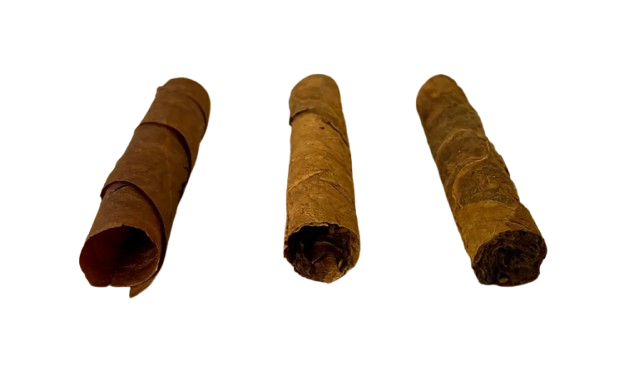
Cameroon tobacco is shade-grown leaf cultivated in Cameroon, Central Africa, used worldwide as a premium cigar wrapper. It’s recognised by its fine “tooth” texture, oily sheen, light colorado colour and neutral-to-sweet flavour — spicy and woody without overpowering a blend.
Ask any seasoned cigar smoker to name the wrappers that matter, and Cameroon comes up early. It has wrapped legendary cigars, it commands a premium by the bale, and — despite decades of effort — nobody has managed to grow a convincing copy of it anywhere else.
That’s not marketing. It’s agronomy. The Cameroon wrapper owes its character to a specific combination of Sumatran genetics, highland volcanic soil and the peculiar cloud cover of western Cameroon. Change any of those and the leaf changes with them.
This guide covers the whole story — history, growing regions, production, flavour and how to buy. If you’re sourcing wrapper leaf, read the buying section first. If you just want to understand the leaf, start at the top.
What Cameroon Tobacco Actually Is
Cameroon tobacco is Nicotiana tabacum — the same species as every commercial cigar tobacco — but grown from seed lines originally brought from Sumatra in the Dutch colonial era and adapted over generations to Cameroonian soil and climate.
The distinction matters commercially. In the trade, Cameroon wrapper is often grouped with “Sumatra” wrappers because of that shared ancestry. But the two are not interchangeable: Cameroon-grown leaf develops a distinctly finer tooth, a slightly sweeter finish and a lighter, more elastic leaf than what the same genetics produce in Indonesia.
Within Cameroon, the leaf serves three jobs:
- Wrapper — the outermost leaf, the one you see and taste most directly.
- Binder — the structural leaf beneath the wrapper.
- Filler — the blend’s body, usually sun-grown rather than shade-grown.
Wrapper grades attract the premium, and wrapper is where Cameroon’s reputation was built. That’s why the phrase cameroon cigar wrapper is almost a category of its own in the trade.
Cameroon tobacco is premium shade-grown African cigar leaf, prized as a wrapper for its tooth, oil and balanced flavour — and defined as much by where it’s grown as by what it is.
A Short History of Tobacco in Cameroon
Cameroon’s relationship with tobacco is older than the wrapper trade. Tobacco was grown and used across the region long before European commercial agriculture arrived, as it was across much of West and Central Africa.
The export story begins in the colonial period, when German and later French administrators and trading companies established plantations and curing infrastructure. Sumatran seed was introduced specifically to chase the wrapper market that Indonesia had proven was lucrative.
What nobody anticipated was that the leaf would do better here in certain respects — particularly in tooth, elasticity and colour consistency. By the mid-twentieth century, Cameroon wrapper was a recognised export commodity with its own buyers in Europe and North America.
The post-independence decades brought state involvement, parastatal marketing boards and, later, liberalisation. Production peaked and then declined as global demand shifted, leaf prices fluctuated and competing origins invested heavily in their own wrapper programmes.
Cameroon wrapper was never the biggest origin by volume. It was the one blenders reached for when they wanted a wrapper with character. On the Cameroon leaf trade
Today Cameroon is a specialist origin rather than a volume player — which is precisely what makes grower-direct sourcing here so valuable. The leaf still commands a premium. The supply is simply smaller and more relationship-driven than the big origins.
Where Cameroon Tobacco Grows
Cameroon’s tobacco is concentrated in the country’s western highlands and, to a lesser extent, the Centre and East regions. The geography is the whole point.
| Region | Character | Typical role |
|---|---|---|
| West Region — Noun, Bamboutos, Menoua | High altitude, volcanic soils, heavy seasonal cloud cover | Premium shade-grown wrapper |
| North-West Region | Highland, cooler, similar cloud profile | Wrapper and binder leaf |
| Centre Region | Warm, lower elevation, longer season | Binder and filler |
| East Region | Humid forest belt, distinct soil profile | Filler and sun-grown leaf |
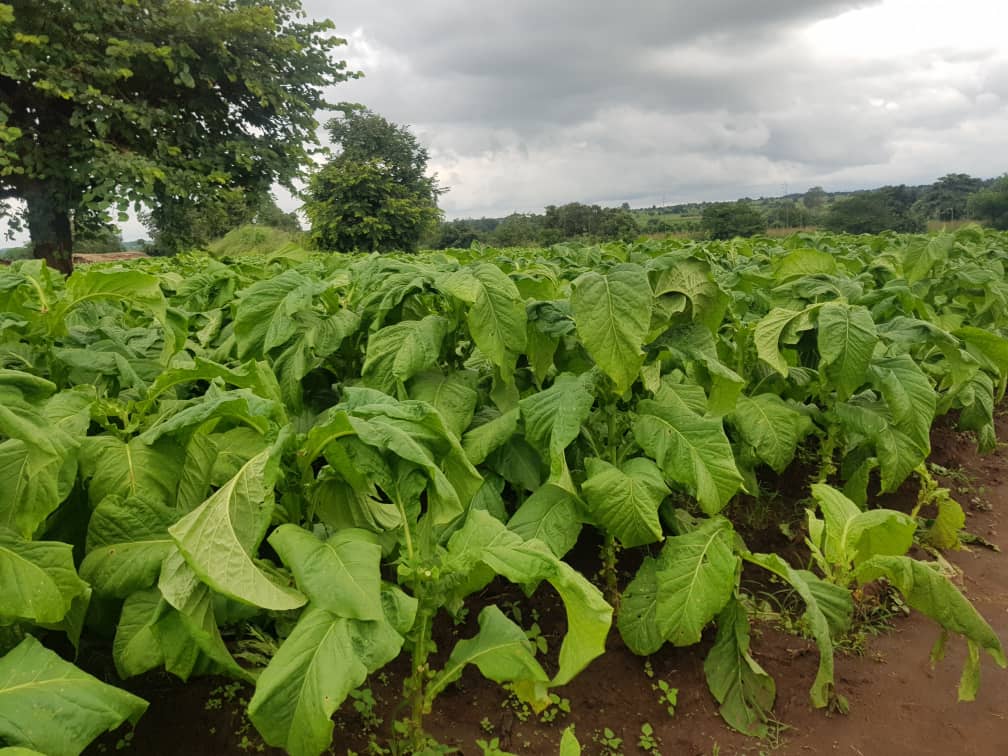
The decisive factor is altitude plus cloud. In the western highlands, the crop spends much of its growing season under a natural haze that filters direct sun — functioning as shade without the cost and infrastructure of artificial shade cloth. That diffuse light is what produces a thin, elastic, fine-toothed wrapper leaf rather than a thick, coarse sun leaf.
How Cameroon Tobacco Is Grown
Seed and nursery
Cameroon tobacco is grown from seed, not cuttings. Growers raise seedlings in carefully prepared nursery beds, protected from direct sun and heavy rain, until the plants are strong enough to transplant. Good seed selection is the quiet foundation of a good crop — genetics set the ceiling on what the leaf can become.
Seed is typically drawn from selected mother plants within the same line, generation after generation, which is how Cameroon’s wrapper genetics have stayed distinctive through decades of cultivation.
Field and growing season
Transplanting happens once the rains are established. From there the crop runs through a growing season of roughly three to four months, during which plant spacing, topping and sucker control all influence leaf size and quality.
Spacing matters more for wrapper than for filler. Wider spacing produces larger, thinner leaves with fewer imperfections — exactly what a wrapper needs. Dense planting is used when the goal is volume of binder or filler rather than wrapper quality.
Shade and the “natural” advantage
True shade-grown wrapper elsewhere in the world often means cheesecloth or synthetic shade tents. In Cameroon’s highlands, the atmosphere does much of that work. The result is a wrapper leaf that behaves like a shade leaf — thin, supple, even in colour — without depending entirely on manufactured shade.
Topping and priming
Growers top the plant to concentrate energy into the leaves rather than the flower. Leaves are then harvested by priming — picking in stages from the bottom of the stalk upward as each layer ripens.
Different primings become different grades: the lower, milder leaves become binder or volado filler; the middle and upper leaves become wrapper and ligero. This is the first point at which a crop is sorted for quality.
Curing and Fermentation
This is where raw leaf becomes cigar tobacco — and where most of the flavour is actually created. Growing gets you the raw material. Curing and fermentation decide whether it’s worth anything.
Air curing
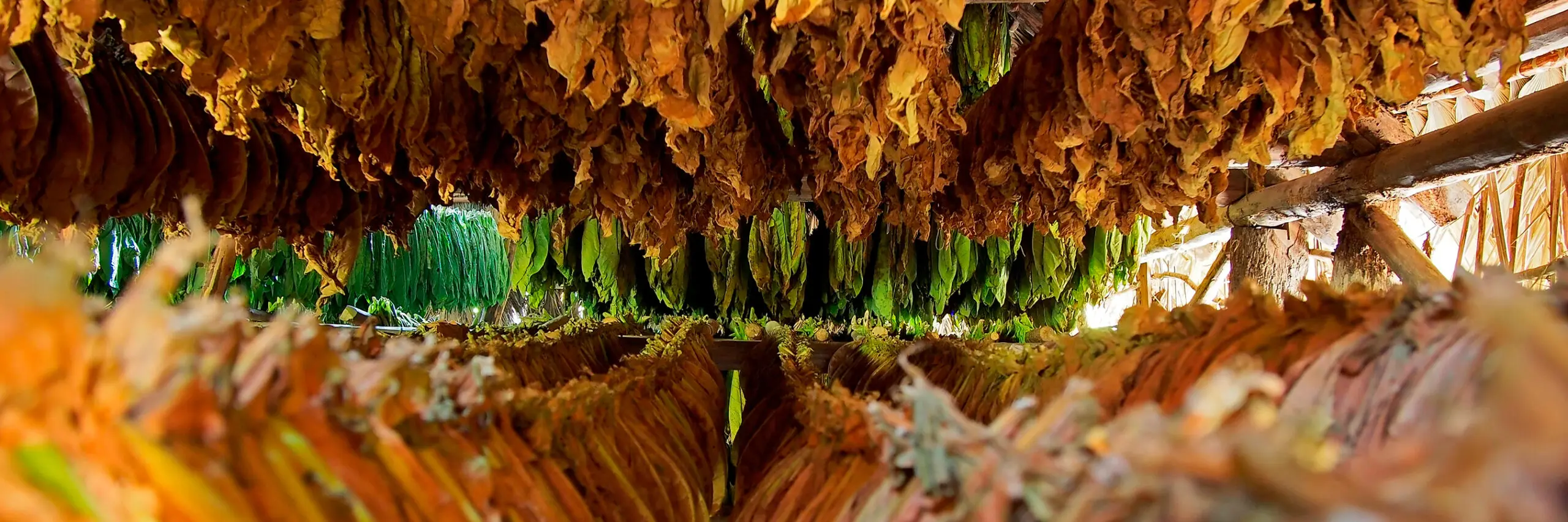
Cigar tobacco is air cured, not fire cured and not flue cured. Primed leaves are strung or racked in barns and left to dry slowly over several weeks. Air moves through the barn, moisture leaves the leaf gradually, and the green fades through yellow and tan to brown.
Rush this stage and the leaf case-hardens — dry on the outside, still green and raw inside. It will never ferment properly after that.
Pile fermentation
Cured leaf is stacked into piles where its own residual moisture and microbial activity generate heat. Those piles are turned by hand, temperature is monitored daily, and the cycle repeats for weeks or months depending on the target result.
Fermentation is what removes ammonia and harshness, deepens colour and develops the sweetness and aroma the leaf is prized for. Push it further and you move from a natural wrapper toward colorado and eventually maduro tones. Stop it early and you keep the leaf light and mild.
Two bales of identical leaf, fermented differently, are effectively two different products. Always ask a supplier about fermentation time and turning schedule — not just colour and grade.
How Cameroon Leaf Is Graded
Grading is done by hand, leaf by leaf, on a table. No machine sorts wrapper tobacco properly — the criteria are visual and tactile.
| Criterion | What graders look for |
|---|---|
| Colour | Evenness across the leaf, no blotching, correct shade for the intended grade |
| Texture / tooth | Fine, uniform grain — the tooth that holds oils and carries flavour |
| Elasticity | The leaf must stretch without tearing, or it can’t be wrapped around a bunch |
| Size & integrity | Enough usable surface area, no holes, tears or disease marks |
| Burn | Clean, even combustion — the test that separates good leaf from pretty leaf |
| Aroma | Clean, sweet, no ammonia or mustiness |
The three wrapper grades
Grade vocabulary overlaps between origins, so always confirm what a supplier means by a term before you buy. “Colorado” from one house and “colorado” from another can be visibly different leaves.
What Does Cameroon Tobacco Taste Like?
This is the question buyers ask most, and the honest answer is: less than you’d expect, and that’s the point.
Cameroon wrapper is neutral to lightly sweet. It contributes a clean woody-spicy character, a soft earthy base note and a dry, gentle finish. It adds complexity without dominating — which is exactly why blenders use it over fuller-bodied fillers.
| Attribute | Cameroon profile |
|---|---|
| Aroma | Wood, warm spice, faint cocoa, fresh earth |
| On the palate | Neutral-sweet, dry, lightly spicy |
| Body contribution | Mild to medium |
| Finish | Clean and lingering, rarely bitter |
| Best pairings | Nicaraguan and Dominican fillers; coffee, aged rum |
Two caveats. First, fermentation changes flavour more than origin does — a maduro-fermented Cameroon tastes meaningfully darker and sweeter than a natural from the same crop. Second, wrapper is only part of the cigar. A Cameroon wrapper over a heavy ligero blend will taste nothing like a mild Connecticut-bunched cigar with the same wrapper.
If you want the wrapper to be the story, keep the filler mild. If you want balance, Cameroon is one of the most forgiving wrappers you can build around.
Cameroon Tobacco vs Other Wrapper Tobacco
| Origin | Colour | Texture | Flavour | Strength |
|---|---|---|---|---|
| Cameroon | Light colorado | Fine tooth, oily, elastic | Neutral-sweet, woody spice | Mild–medium |
| Connecticut Shade | Golden blond | Silky, very smooth | Creamy, mild, delicate | Mild |
| Sumatra | Medium brown | Toothy, slightly coarser | Earthy, spicy | Mild–medium |
| Habano | Reddish brown | Smooth, oily | Peppery, rich | Medium–full |
| Maduro Broadleaf | Dark brown–black | Thick, rustic | Sweet, cocoa, earth | Medium–full |
| Candela | Pale green | Smooth, thin | Grassy, mild, bright | Mild |
The full side-by-side, with guidance on which to choose for a given blend, lives in our Cameroon vs Connecticut and Maduro comparison.
The Cameroon Tobacco Industry Today
Cameroon’s tobacco sector is smaller than its reputation. It runs on a mix of smallholder growers, larger estates and processing operations concentrated around the western highlands and the port city of Douala, through which most export leaf moves.
Historically, international tobacco companies — including British American Tobacco — maintained significant operations and processing facilities in the country, and their presence shaped the local industry’s infrastructure. That footprint has contracted over time, and today the market is a mix of established companies, cooperatives and independent grower-exporters.
Why supply is tight
- Wrapper leaf is a small share of total production — most land goes to higher-yielding filler.
- Grading is manual and labour-intensive, which caps throughput.
- Global wrapper demand concentrates on a handful of origins, and buyers often lock in crop contracts early.
- Fermentation takes months, so supply can’t be ramped up within a single season.
The practical consequence for buyers: good Cameroon wrapper is bought before harvest, not after. If you find a grade you want in March, it may already be committed for the year.
Buying Cameroon Tobacco Leaf
If you’re sourcing wrapper, binder or filler, here’s what actually determines
What to specify in a quotation request
Vague enquiries get vague answers. Give a supplier these six things and you’ll get a usable grade sheet and price back the same week:
| Specify | Why it matters |
|---|---|
| Product — wrapper, binder or filler | Completely different crops, grades and pricing |
| Grade & colour — natural, colorado, maduro | Determines fermentation time and premium |
| Volume — bales or kg per shipment | Sets whether you qualify for crop-contract pricing |
| Destination port | Drives freight, phytosanitary and documentation requirements |
| Delivery window | Leaf is committed pre-harvest; timing decides availability |
| Certification needs | Phytosanitary, origin, moisture and fumigation paperwork |
Always ask for a sample bale first
No photograph tells you whether leaf will wrap without tearing. Whether the tooth is fine or coarse. Whether the colour is even across the bale or blotchy under the top layer.
A sample tells you all of it in ten minutes at your own table. Any supplier unwilling to send one — or charging a premium for the privilege — is telling you something about how the rest of the order will go.
What a grade sheet should contain
- Crop year and region of origin
- Grade name and colour class
- Priming / stalk position
- Average leaf length and usable surface
- Moisture content at packing
- Fermentation duration and turning schedule
- Bale weight, packing method and seal
1. No crop year given — leaf gets repackaged and resold as “current” for years. 2. Unwillingness to discuss fermentation. 3. Price far below the market with no explanation of grade or age. Cheap wrapper is cheap for a reason.
Grower-direct vs trader
You can buy Cameroon leaf through traders, agents or the grower. Each has a place — traders carry stock and can fill small orders fast. But for wrapper, grower-direct buys you traceability to crop and farm, control over fermentation spec, and a relationship that gets you leaf in a tight season.
It also means one less margin stacked on the price. Which is why our whole model is grower-direct — the leaf ships from the floor it was graded on.
Cameroon Tobacco — Frequently Asked Questions
What does Cameroon tobacco taste like?
Neutral to lightly sweet, with wood, warm spice and gentle earth notes. It’s a mild-to-medium wrapper that adds complexity without overpowering a blend — clean, dry finish, rarely bitter.
What is Cameroon tobacco used for?
Mainly as a premium cigar wrapper, and to a lesser extent as binder and filler. Cameroon wrapper is the application that built the origin’s reputation.
Why is a Cameroon wrapper lighter in colour?
Two reasons. The leaf grows under natural cloud cover in the western highlands rather than direct equatorial sun, and it’s typically fermented only to a colorado shade rather than a long maduro ferment. Less sun stress and shorter fermentation keep the colour light and the texture fine.
What is wrapper “tooth”?
Tooth is the fine, sandy grain on the leaf’s surface. Those microscopic bumps hold oils that release aroma and flavour as the cigar burns. Fine, even tooth is one of the marks of a genuinely good Cameroon wrapper.
Is Cameroon tobacco the same as Sumatra?
Related, not the same. Cameroon wrapper genetics trace back to Sumatran seed, which is why traders sometimes group them. But Cameroonian soil and climate produce a finer tooth, lighter colour and more elastic leaf than the same genetics yield in Indonesia.
Where in Cameroon is tobacco grown?
Concentrated in the western highlands — the West and North-West regions, particularly around Noun, Bamboutos and Menoua — with binder and filler production extending into the Centre and East regions.
Can I buy Cameroon tobacco seeds?
Seed is occasionally available from specialised suppliers, but the practical answer for most buyers is that wrapper quality depends on growing conditions — Cameroon seed grown elsewhere does not produce Cameroon wrapper. If your interest is in the leaf rather than agronomy, sourcing cured leaf is the realistic route.
Do you supply small factories or only large manufacturers?
Both. We’re MOQ-friendly for boutique producers and run crop contracts for larger factories. Tell us your volume and destination and we’ll quote accordingly.
How do I verify the leaf is genuinely from Cameroon?
Ask for crop year, farm or region of origin, and export documentation issued in Cameroon including phytosanitary certification. A grower with a physical operation can give you all three — and should do so without hesitation.
Explore the Leaf Further
Source Cameroon Leaf Grower-Direct
Wrapper, binder and filler, graded on our floor in Cameroon and shipped worldwide with full export documentation. Tell us your spec and we’ll send a grade sheet.